How Boundaries Help You Build Self-Trust and Confidence
Self-trust is one of the most important foundations of emotional well-being. When you trust yourself, decisions feel clearer, relationships feel more balanced, and your inner voice becomes easier to hear.
Yet many people struggle with self-trust without fully understanding why.
One of the most common reasons is a lack of clear boundaries. When individuals consistently ignore their own needs or instincts in order to accommodate others, it can slowly weaken confidence in their own judgment.
Over time, this can lead to second-guessing decisions, feeling uncertain about personal needs, or relying heavily on outside validation.
This article is part of our Healthy Boundaries and Self-Trust series, where we explore practical ways to protect your energy, strengthen emotional awareness, and develop confidence in your decisions.
In earlier articles, we explored why saying no can feel so difficult, how to set boundaries without guilt, and how protecting your energy supports self-care. In this final article, we connect these ideas by looking at how boundaries play a powerful role in rebuilding self-trust.
What Self-Trust Really Means

Self-trust is the ability to rely on your own thoughts, emotions, and instincts when making decisions.
It does not mean always feeling certain or having all the answers. Instead, it means believing that your inner experiences provide valuable guidance.
When self-trust is strong, individuals often experience:
Greater confidence expressing their needs
Clearer decision-making
Reduced reliance on external approval
Stronger emotional resilience during challenges
Self-trust allows you to listen to your own perspective even when others may have different opinions.
However, when boundaries are unclear or consistently ignored, individuals may begin to doubt their own instincts
How Ignoring Your Needs Weakens Self-Trust
Each time you override your own needs or feelings in order to accommodate others, your internal guidance system becomes a little quieter.
At first, this may not seem significant. But over time, the pattern can lead to thoughts such as:
“Maybe I’m overreacting.”
“My needs probably aren’t that important.”
“I should just deal with it.”
These thoughts gradually erode confidence in your own judgment.
Many individuals who struggle with self-doubt also struggle with people-pleasing patterns. If this resonates with you, you may find it helpful to explore why saying no feels so hard and how people-pleasing patterns develop.
Understanding these patterns can be the first step toward rebuilding trust in yourself.
How Boundaries Reinforce Self-Respect

Boundaries play an essential role in restoring self-trust because they require you to recognize and communicate your needs.
Every time you set a boundary, you reinforce an important message to yourself:
“My needs matter.”
This simple message strengthens your sense of self-respect.
Examples of boundaries that support self-trust include:
Declining commitments that overwhelm your schedule
Expressing your preferences in relationships
Protecting personal time for rest and reflection
Asking for support when you feel overwhelmed
These decisions may seem small, but they have a powerful cumulative effect. Each time you honor your needs, your value and trust in yourself strengthens.
Learning to communicate boundaries clearly is an important step in this process. If you are still developing this skill, our guide on how to set boundaries without feeling guilty offers practical strategies you can begin using right away.
Why Protecting Your Energy Strengthens Self-Trust

Self-trust is closely connected to how well you protect your emotional energy.
When individuals consistently overextend themselves, exhaustion and resentment can develop. These feelings often make it more difficult to think clearly or make confident decisions.
Protecting your energy allows your mind and body to return to a more balanced state.
For example, setting boundaries around your schedule, emotional availability, or personal time creates space for reflection and clarity.
If you’d like to explore this idea further, you may find our article on protecting your energy through self-care and boundaries helpful.
When emotional energy is protected, the inner voice becomes easier to hear.
Small Practices That Help Rebuild Self-Trust

Rebuilding self-trust does not happen all at once. Instead, it develops gradually through consistent actions that honor your needs.
You might begin with a few small practices:
Pause before agreeing to commitments
Giving yourself time to reflect helps ensure decisions align with your needs.
Reflect on how decisions make you feel
Journaling or quiet reflection can help you understand your emotional responses.
Express preferences clearly
Even small expressions of preference reinforce confidence.
Protect time for rest and reflection
Personal time allows you to reconnect with your inner voice.
These simple habits gradually strengthen the connection between your awareness and your decisions. Over time, trusting yourself becomes more natural.
In Conclusion
Self-trust grows through consistent actions that honor your inner voice.
Boundaries play an essential role in this process because they require you to recognize your needs and communicate them clearly.
Each time you set a boundary, you reinforce your sense of self-respect and strengthen confidence in your decisions.
Over time, what once felt uncomfortable becomes a natural expression of self-awareness, emotional balance, and personal growth.
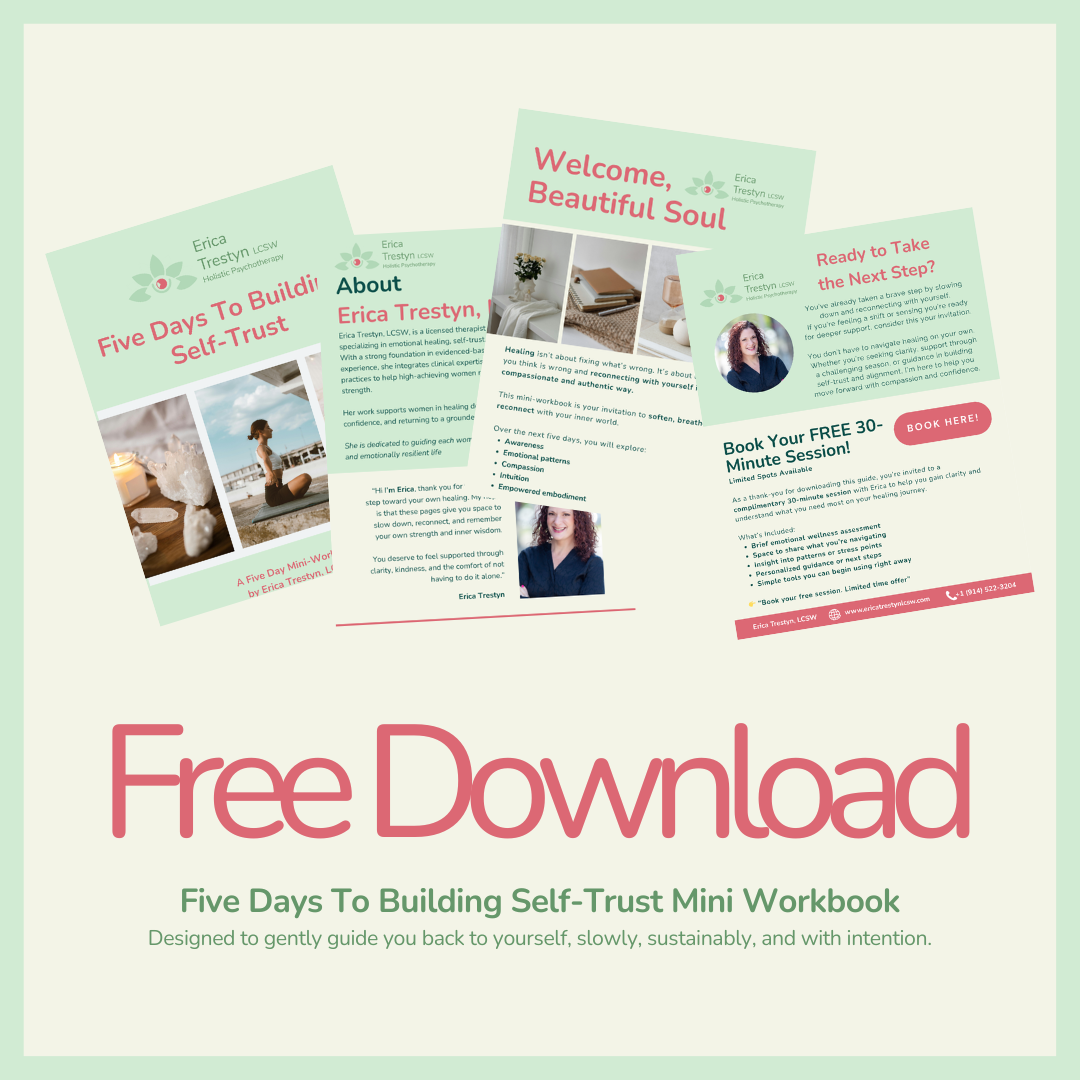
If you’re ready to strengthen your confidence and reconnect with your inner voice, the Free 5-Day Self-Trust Mini Workbook offers simple exercises designed to help you build emotional awareness and begin practicing self-trust in everyday decisions.
Download the workbook to begin exploring these tools at your own pace.
If you'd like deeper guidance as you develop self-trust and healthier boundaries, you’re welcome to schedule a free consultation to learn more about my 6-Week Self-Trust Program.
In this program we focus on:
Strengthening emotional awareness
Overcoming patterns of self-doubt
Communicating boundaries confidently
Reconnecting with your intuition and inner confidence
And this month, in honor of Mental Health Awareness Month I am offering a limited time Promotional Discount for Enrolling. Contact us today to learn more and schedule your free consultation.
Email: info@ericatrestynlcsw.com
Frequently Ask Questions
-
Self-trust is confidence in your ability to understand and honor your own thoughts, emotions, and needs.
-
Yes. Boundaries reinforce self-respect and help individuals feel more confident expressing their needs and preferences.
-
When someone doubts their own judgment, they may hesitate to communicate limits or preferences. Strengthening self-trust can make boundaries feel more natural.
-
Start by making small decisions that honor your needs, practicing clear boundaries, and reflecting on your emotional responses.