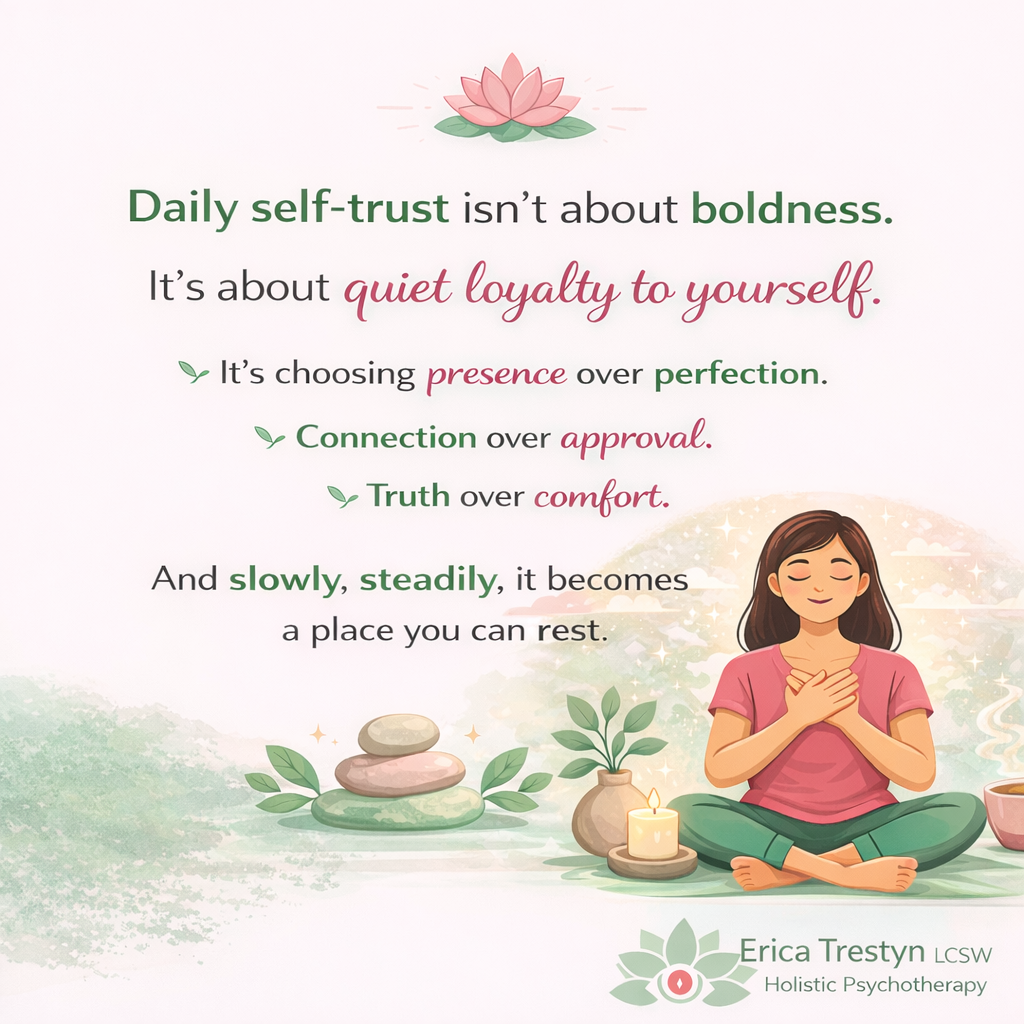
What is Self-Trust Really?
Self-trust isn’t just about listening to yourself.
It’s about staying with yourself when doing so brings discomfort, grief, or fear.
For many people, the hardest part of self-trust isn’t knowing what they need, it’s allowing themselves to honor it without self-abandonment.
This is what self-trust looks like beneath the surface.
Why Daily Choices Are Where Self-Trust Is Tested?
Big life decisions get the spotlight, but self-trust is built in the ordinary moments.
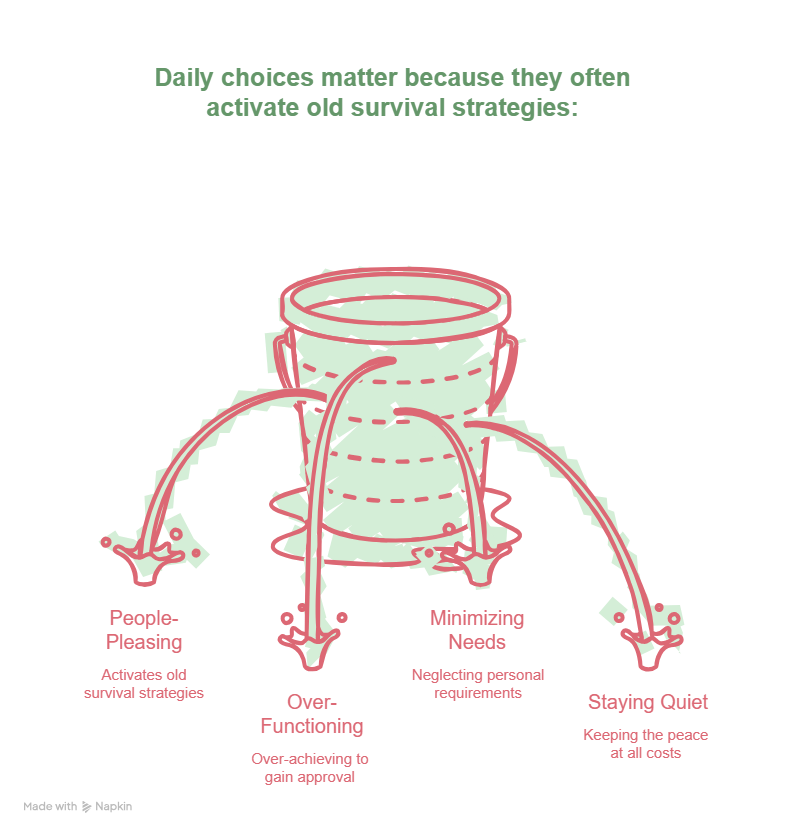
When your nervous system learns that safety depends on being easy, productive, or agreeable, trusting yourself can feel risky, even when it’s healthy.
Self-trust asks a different question:
“Can I stay connected to myself even if others are uncomfortable?”
Can I stay connected to myself even when I become uncomfortable?
The Emotional Cost of Honoring Yourself
Self-trust is not just empowering, it can also be painful.
It may involve:
Disappointing someone you care about
Feeling guilty after setting a boundary
Grieving old versions of yourself who survived by self-silencing
Sitting with loneliness when you stop over-giving
These emotions don’t mean you’re doing something wrong.
They mean you’re doing something different.
Self-Trust Means Letting Go of Old Patterns of Protection
Many people confuse self-trust with confidence, but it’s actually about unlearning.
Unlearning:
That your needs are not important
That rest must be earned
That harmony matters more than honesty
That being “good” means being small
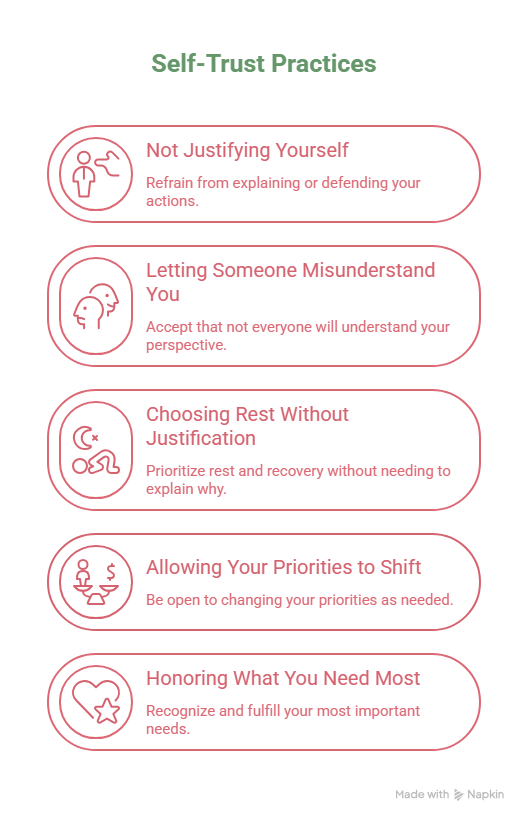
These choices can feel unsettling especially if your identity was built around being reliable, capable, or needed
Self-Trust as an Ongoing Relationship
Self-trust is relational, not transactional.
It isn’t something you earn by making the “right” choices.
It’s built when you:
Respond to yourself with honesty
Stay present through emotional discomfort
Repair when you override yourself
Offer compassion instead of punishment
Over time, your nervous system learns:
“Even when this is hard, I’m not alone, I can trust myself.”
That is the foundation of real safety.
A Deeper Reframe
If self-trust feels heavy or unfamiliar, it’s not because you lack strength.
It’s because trusting yourself may mean stepping out of roles that once kept you safe.
Self-trust asks:
“Who am I when I start asking myself what I need?”
And that’s not a small question.