Why You Feel Emotionally Stuck (And How Emotional Healing Helps You Move Forward)
Feeling emotionally stuck can be a frustrating part of the emotional healing process. Many people reach a point where they understand their patterns but still struggle to move forward. This often happens when emotional habits, nervous system responses, and protective coping strategies have developed over time. By deepening emotional awareness and approaching these patterns with compassion and curiosity, it becomes possible to gently shift them and create meaningful progress in emotional healing.
Why You Feel Emotionally Stuck
(And How Emotional Healing Helps You Move Forward)
At some point in the process of personal growth, many people reach a moment where they quietly wonder:
"Why do I still feel stuck?"
You might have gained insight into your patterns. You may have read books, listened to podcasts, or even spent time reflecting on your emotions. And yet, something inside still feels like it hasn’t fully shifted.
This experience can feel discouraging, but it’s actually a very normal part of the process of emotional healing.
Emotional healing doesn’t usually happen in one clear breakthrough moment. Instead, it unfolds gradually as we begin to understand the deeper emotional patterns, nervous system responses, and protective strategies that have shaped how we move through life.
Feeling emotionally stuck often means something inside is asking for deeper attention, compassion, or integration.
In this article, we’ll explore:
Why emotional patterns can feel difficult to change
How emotional protection mechanisms develop
Why insight alone doesn’t always create transformation
How emotional healing helps you move forward in a more sustainable way
What Feeling Emotionally Stuck Often Looks Like
Feeling stuck emotionally doesn’t always appear as obvious distress. Sometimes it shows up in quieter ways.
You might notice:
Repeating similar relationship dynamics
Constantly second-guessing your decisions
Feeling like you're “almost there” in personal growth but not fully moving forward
Recognizing patterns but still feeling pulled back into them
Feeling disconnected from your own needs or intuition
Many people describe it as feeling like they are aware of their patterns but unable to fully shift them.
This experience can lead to self-criticism, frustration, or the belief that something must be wrong with them.
But in reality, emotional patterns often develop as protective responses, and those responses take time and care to gently unwind.
Understanding this can be a powerful step in emotional healing.
Emotional Patterns Often Begin as Protection

Many of the emotional patterns we struggle with today originally developed as ways to help us cope with stress, uncertainty, or difficult experiences.
For example:
People-pleasing may develop as a way to maintain harmony and avoid rejection.
Overthinking may develop as a way to anticipate problems and stay in control.
Emotional withdrawal may develop as a way to protect against vulnerability or disappointment.
At some point in life, these strategies likely served a purpose. They helped create a sense of safety or predictability.
But over time, protective strategies can become unhealthy patterns that no longer support our growth.
Research discussed by American Psychological Association suggests that emotional coping strategies often become deeply embedded because they are reinforced through repeated experiences.
This is why emotional patterns can feel so automatic, and sometimes cause us to feel “stuck”.
Recognizing that these responses were once forms of protection allows us to approach them with more compassion rather than criticism, which is essential for emotional healing.
The Nervous System’s Role in Feeling Stuck
Emotional patterns are not only psychological, they are also physiological.
Your nervous system is constantly monitoring your environment for cues of safety or threat. When it senses uncertainty, it often defaults to familiar coping responses.
Even when you consciously want to change, your nervous system may still gravitate toward patterns that feel familiar.
This can explain experiences like:
Wanting to set boundaries but feeling anxious doing so
Recognizing a relationship pattern but repeating it anyway
Wanting to trust yourself more but still second-guessing decisions
Your nervous system isn’t trying to sabotage your growth, it’s trying to maintain predictability and safety.
Emotional awareness and nervous system regulation help the brain integrate new emotional experiences.
When the nervous system begins to feel safer, it becomes easier to respond differently.
This is why emotional healing often involves both insight and regulation.
Why Insight Alone Doesn’t Always Create Change
One of the most common frustrations people experience in personal growth is this:
"I understand my patterns… but I still feel stuck."
Insight is incredibly valuable. It allows us to recognize what is happening internally.
But insight alone doesn’t always shift deeply ingrained emotional responses.
For example, someone may understand that their self-doubt comes from earlier experiences of criticism, but still feel that doubt arises in important moments.
This happens because emotional patterns are stored not only in thoughts but also in the body and nervous system.
Emotional healing often requires:
Experiencing emotions safely rather than suppressing them
Practicing new emotional responses
Building trust in your ability to navigate discomfort
Developing self-compassion when patterns reappear
Transformation tends to happen through repeated small experiences of responding differently, rather than one moment of realization.
Signs Emotional Healing Is Already Happening

One of the most surprising parts of emotional healing is that progress often appears subtly at first.
You may already be experiencing growth if you notice things like:
Becoming more aware of emotional triggers
Pausing before reacting to stress
Recognizing patterns that once felt invisible
Questioning beliefs that once felt unquestionable
Developing greater compassion for your past experiences

These shifts might not always feel dramatic, but they represent important internal movement.
Healing often begins with awareness before it becomes visible through behavior changes.
Moving Forward: Gentle Shifts That Support Emotional Healing
Moving forward emotionally doesn’t mean forcing yourself to change overnight.
Instead, emotional healing tends to unfold through small consistent shifts in how we relate to ourselves and our emotions.

Here are a few ways to support that process.
1. Strengthen Emotional Awareness
Regularly checking in with your emotions helps you recognize patterns earlier.
You might ask yourself:
What am I feeling right now?
What triggered this emotion?
What might this feeling be asking for?
Awareness creates space for new choices.
2. Practice Self-Compassion
Many people approach personal growth with intense self-criticism.
But research shows that self-compassion improves emotional resilience and psychological wellbeing.
Self-compassion allows you to acknowledge patterns without reinforcing shame.
3. Focus on Small, Sustainable Changes
Emotional healing doesn’t require dramatic transformations.
Small changes, like pausing before reacting, expressing your needs more clearly, or allowing yourself to feel emotions rather than avoiding them, can gradually reshape emotional patterns.
Over time, these shifts create meaningful change.
Emotional Healing Is an Ongoing Relationship With Yourself
Many people believe emotional healing means eventually reaching a point where they are no longer affected by difficult emotions or patterns.
But healing is rarely about eliminating challenges entirely.
Instead, emotional healing often involves developing a new relationship with yourself.
One that includes:
Greater self-awareness
Deeper self-compassion
Trust in your emotional resilience
The ability to move through challenges with more clarity
When we approach emotional growth this way, feeling “stuck” becomes less of a failure and more of an invitation to look deeper.
Key Takeaways
Feeling emotionally stuck is a common stage in the emotional healing process.
Many emotional patterns began as protective coping strategies.
The nervous system often maintains familiar emotional responses for safety.
Insight is valuable but transformation happens through repeated new experiences.
Self-compassion and awareness create the conditions for emotional change.
Every moment of understanding yourself more deeply is part of the process of emotional healing.
Internal Resources
If you’d like to explore emotional healing further, these articles may also be helpful:
If you’re looking for support in learning how to process emotions and build emotional awareness, we’re here to help.
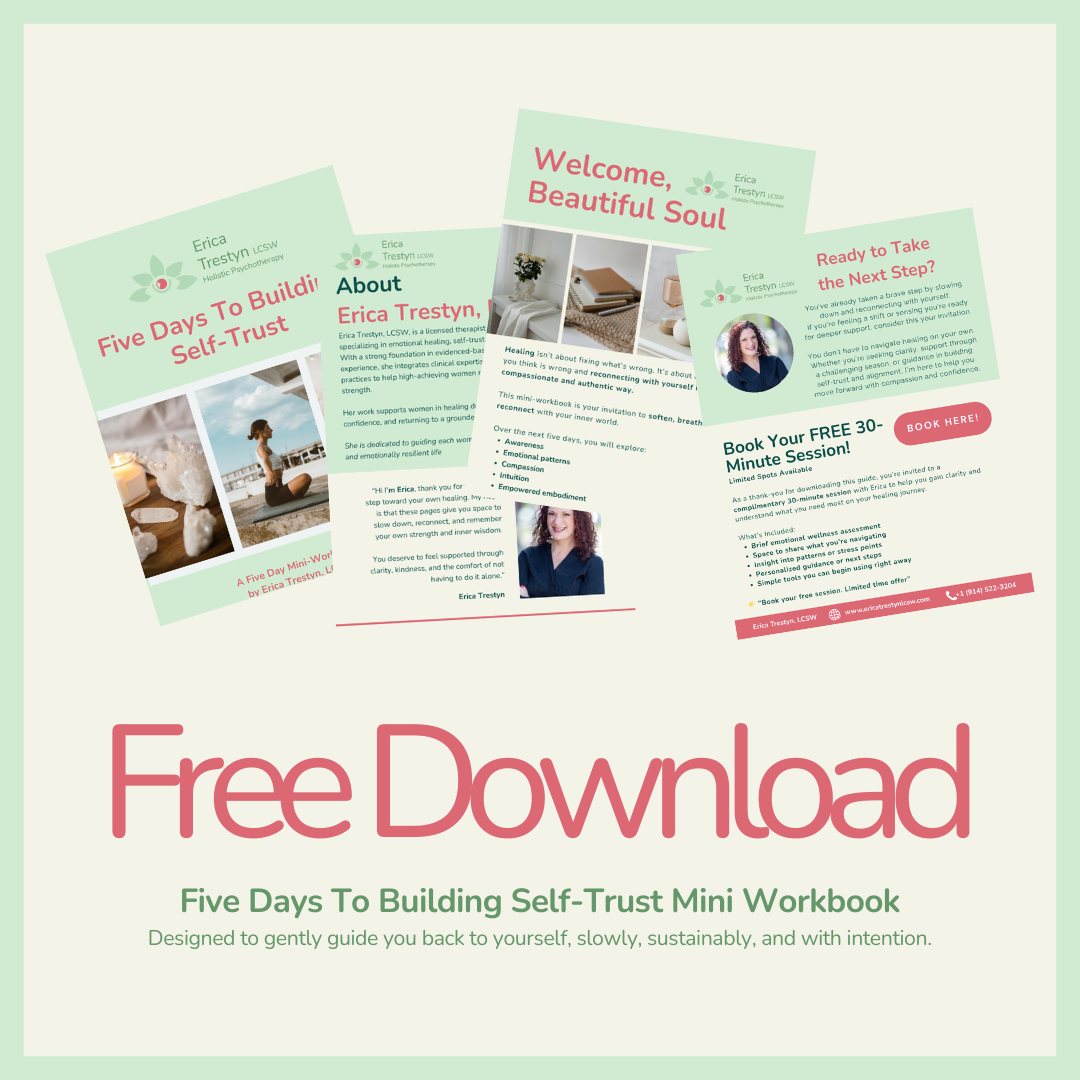
If you are looking for more guidance on how to build more emotional awareness feel free to reach out and schedule a Self-Trust Clarity Call
Email us at info@ericatrestynlcsw.com for questions or feedback.
Frequently Asked Questions About Feeling Emotionally Stuck
-
Feeling emotionally stuck often happens when emotional patterns or coping strategies developed earlier in life continue to repeat automatically. Emotional healing involves bringing awareness to these patterns and gradually shifting how you respond to them.
-
Emotional healing is a gradual process that unfolds over time, there is no measured length for individual progress. This happens through increased awareness, small behavioral changes, and developing healthier emotional responses.
-
Yes. With emotional awareness, self-compassion, and supportive practices, emotional patterns can shift over time. The brain and nervous system are capable of adapting and developing new responses.