How to Create Emotional Safety and Feel More Grounded in Your Daily Life
Why Emotional Safety Is the Missing Piece
If you’ve been following along this month, you’ve already started to understand that nervous system regulation isn’t about forcing yourself to calm down, it’s about helping your body feel safe enough to do so.
In Nervous System Regulation: How to Reset, Rest, and Feel Safe in Your Body Again, we explored how your body moves through stress and why you may feel stuck in anxiety or overwhelm.
In How to Reduce Self-Criticism and Calm Your Nervous System, we looked at how your inner dialogue can either activate or calm your nervous system.
Now we’re taking this one step further:
How do you actually create emotional safety in your everyday life?
Because without safety, regulation doesn’t stick.
You can try all the tools, breathing exercises, and mindset shifts, but if your body still feels unsafe, it will continue to default to stress patterns like:
Overthinking
People-pleasing
Emotional reactivity
Shutdown or avoidance
Emotional safety is what allows your nervous system to finally exhale.
What Is Emotional Safety (And Why It Matters for Nervous System Regulation)

Emotional safety is the internal experience of feeling:
Supported
Not under threat
Allowed to be where you are
Able to exist without constant pressure
It doesn’t mean life is perfect or stress-free.
It means your body is not constantly bracing for something to go wrong.
When emotional safety is present, your nervous system can shift out of survival mode and into a more regulated state.
This is where you begin to experience:
More calm and clarity
Less urgency and pressure
Increased emotional stability
A deeper sense of self-trust
If you’ve been struggling with anxiety or internal overwhelm, this is often the missing foundation, something we work through in more depth on my anxiety and self-doubt support page.
Why Emotional Safety Can Feel So Difficult to Access
For many people, emotional safety isn’t something they learned early on.
Instead, they learned to:
Stay alert
Anticipate problems
Take responsibility for others’ emotions
Push through discomfort
These patterns may have been adaptive at one point, but over time, they keep your nervous system in a constant state of activation.
Even when things are “fine,” your body may still feel:
On edge
Restless
Mentally busy
Unable to fully relax
This is why simply telling yourself to “calm down” doesn’t work.
Your nervous system needs consistent experiences of safety, not just awareness.
The Shift: Safety Is Something You Create, Not Something You Wait For

One of the most empowering parts of this work is realizing:
You don’t have to wait for everything around you to feel safe. You can begin creating safety within yourself.
This happens through small, intentional shifts in how you:
Speak to yourself
Move through your day
Respond to stress
Support your body
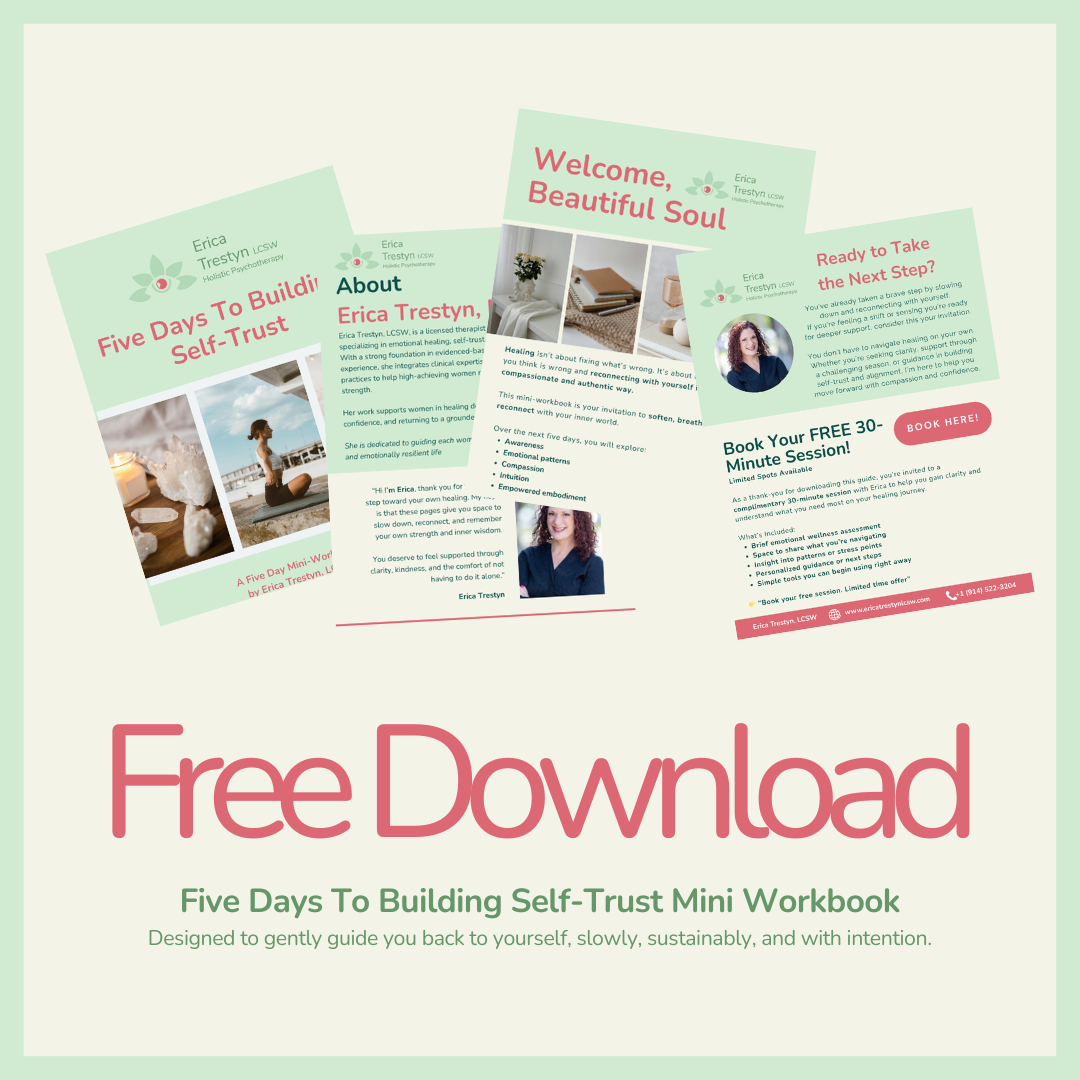
If you haven’t yet, I recommend starting with the foundational practices in my Free 5-Days To Building Self-Trust Workbook, which lays the groundwork for this process.
5 Ways to Create Emotional Safety in Your Daily Life

These practices are simple, but incredibly effective when done consistently.
1. Slow Down Your Internal Pace
Even if your schedule is full, your internal pace matters.
Notice:
Are your thoughts rushed?
Are you moving quickly from one thing to the next?
Try intentionally slowing down one small moment:
Take a slower breath
Pause before responding
Move more deliberately
This signals to your nervous system: “There’s no immediate threat.”
2. Build Predictable, Grounding Routines

Your nervous system thrives on predictability.
Simple routines can create a sense of safety:
Morning check-ins
Evening wind-down rituals
Consistent breaks during the day
These don’t need to be elaborate.
They just need to be consistent.
3. Reduce Internal Pressure in Real Time
As we explored in How to Reduce Self-Criticism and Calm Your Nervous System, internal pressure is one of the fastest ways to dysregulate your nervous system.
In the moment, try shifting from:
“I need to figure this out right now”
To:
“I can take this one step at a time”
This creates immediate relief in the body.

4. Create Physical Cues of Safety
Your body responds strongly to physical sensations.
You can create safety through:
Wrapping yourself in a blanket
Sitting in a comfortable, supported position
Placing a hand on your chest or arms
These signals help your body register:“I am safe enough right now.”
5. Limit Overstimulation Where You Can
Constant input, notifications, noise, multitasking, can keep your nervous system activated.
Start small:
Take breaks from screens
Sit in silence for a few minutes
Step outside without distractions
These moments allow your system to reset.
What Emotional Safety Feels Like Over Time

As you begin practicing this consistently, you may notice subtle shifts:
Your mind feels quieter
You react less intensely to stress
You feel more present in your body
Rest starts to feel more accessible
You trust yourself more in difficult moments
This is how nervous system regulation becomes sustainable.
Not through force, but through repeated experiences of safety.
How This Work Builds Into Long-Term Change

Emotional safety is not a quick fix.
It’s a practice.
And over time, it becomes the foundation for:
Healthier boundaries
Reduced people-pleasing
Greater emotional resilience
A more grounded sense of self
This is also where deeper support can be helpful.
If you’re looking to go beyond surface-level tools, you can explore working together through a Free consultation for my 6-week Self-Trust Program, where we integrate nervous system regulation with emotional healing in a structured way.
Key Takeaways
Emotional safety is essential for nervous system regulation
You don’t have to wait for safety, you can begin creating it internally
Small, consistent practices are more effective than intense effort
Reducing internal pressure plays a major role in feeling grounded
Your body needs repeated experiences of safety to shift out of stress patterns
If you’ve been feeling stuck in anxiety, overwhelm, or constant internal pressure, your nervous system may not need more effort, it may need more safety.
Download my free 5-day Nervous System Reset Workbook to start creating calm, clarity, and emotional stability in your daily life.
And if you’re ready for deeper, guided support:
Schedule a free consultation to explore my 6-week Self-Trust program, where we work through nervous system regulation, self-doubt, and emotional overwhelm so you can feel more grounded, confident, and at ease.
FAQ Section: Emotional Safety and Regulation
-
Emotional safety is the internal experience of feeling supported, not under threat, and able to exist without constant pressure or fear of judgment.
-
Your nervous system may still be responding to past patterns or stress. Safety is something your body learns through repeated experiences, not just awareness.
-
You can begin by slowing your pace, softening your inner dialogue, creating small routines, and allowing yourself moments of rest without guilt.
-
Yes. When your body feels safe, your nervous system is less likely to stay in a stress response, which can significantly reduce anxiety and overwhelm.