How to Reduce Self-Criticism and Calm Your Nervous System
The Hidden Stressor You Might Be Overlooking
In the last blog, we explored how nervous system regulation is the foundation for feeling calm, grounded, and emotionally stable.
But there’s one major factor that often goes unnoticed and continues to keep your nervous system in a state of stress:
Your inner dialogue.
Even if your external environment feels manageable, the way you speak to yourself internally can either create safety… or reinforce a constant sense of pressure.
For many high-achieving adults, busy moms, and individuals used to carrying a lot of responsibility, self-criticism becomes normalized.
It can sound like:
“I should be doing more”
“Why can’t I get it together?”
“I shouldn’t feel this way”
And while this might seem like motivation, it’s actually keeping your nervous system activated.
In this blog, we’ll explore:
How self-criticism affects your nervous system
Why it’s so hard to break the pattern
Practical ways to shift toward a more regulating internal voice
How this supports long-term emotional healing
How Self-Criticism Impacts the Nervous System
Your nervous system doesn’t distinguish much between external stress and internal pressure.
When your inner voice is harsh, urgent, or judgmental, your body interprets it as a threat.

This can trigger:
Increased anxiety
Tightness in the chest or body
Overthinking and mental loops
Difficulty relaxing or resting
In other words, self-criticism keeps you in a fight-or-flight state.
Even when nothing around you is actually wrong.
This is why you might:
Feel on edge even during downtime
Struggle to “turn off” your mind
Experience guilt when you try to rest
Why Self-Criticism Becomes a Pattern
Self-criticism isn’t random. It's learned.
For many people, it developed as a way to:
Stay in control
Avoid mistakes
Meet expectations
Gain approval
At some point, it may have even felt helpful.
But over time, it becomes internalized.
Instead of supporting you, it starts to:
Increase pressure
Reduce self-trust
Keep your nervous system activated
And because it’s so familiar, it can feel like:
“This is just how I am.”
But it’s not who you are. It's a pattern your nervous system learned.
The Shift: From Criticism to Regulation
Reducing self-criticism isn’t about forcing positive thinking.
It’s about changing the tone of your internal experience so your body can feel safer.
Think of it this way:
Your nervous system responds more to how something is said than what is said.
Compare:
“You need to get it together”
vs.“You’re feeling overwhelmed right now. Let's take this one step at a time”
Same awareness.
Very different nervous system response.
5 Ways to Reduce Self-Criticism and Support Nervous System Regulation

1. Start Noticing Your Inner Dialogue (Without Judgment)
Awareness is the first step.
Instead of trying to change your thoughts immediately, begin by noticing:
When criticism shows up
What it sounds like
How your body responds
This creates space between you and the pattern.
2. Shift from Judgment to Curiosity
Curiosity is regulating. Judgment is activating.
Try asking:
“What am I feeling right now?”
“What might I need in this moment?”
This helps your nervous system feel supported instead of attacked.
3. Soften the Language You Use with Yourself
You don’t need to jump to overly positive affirmations.
Start with neutral, supportive language:
“This is hard right now”
“I’m doing the best I can”
“It’s okay to take this slowly”
These small shifts create safety over time.

4. Interrupt the Pattern with a Physical Reset
Because this is a nervous system response, involving the body helps.
Try:
Taking a slow breath
Placing a hand on your chest
Grounding your feet
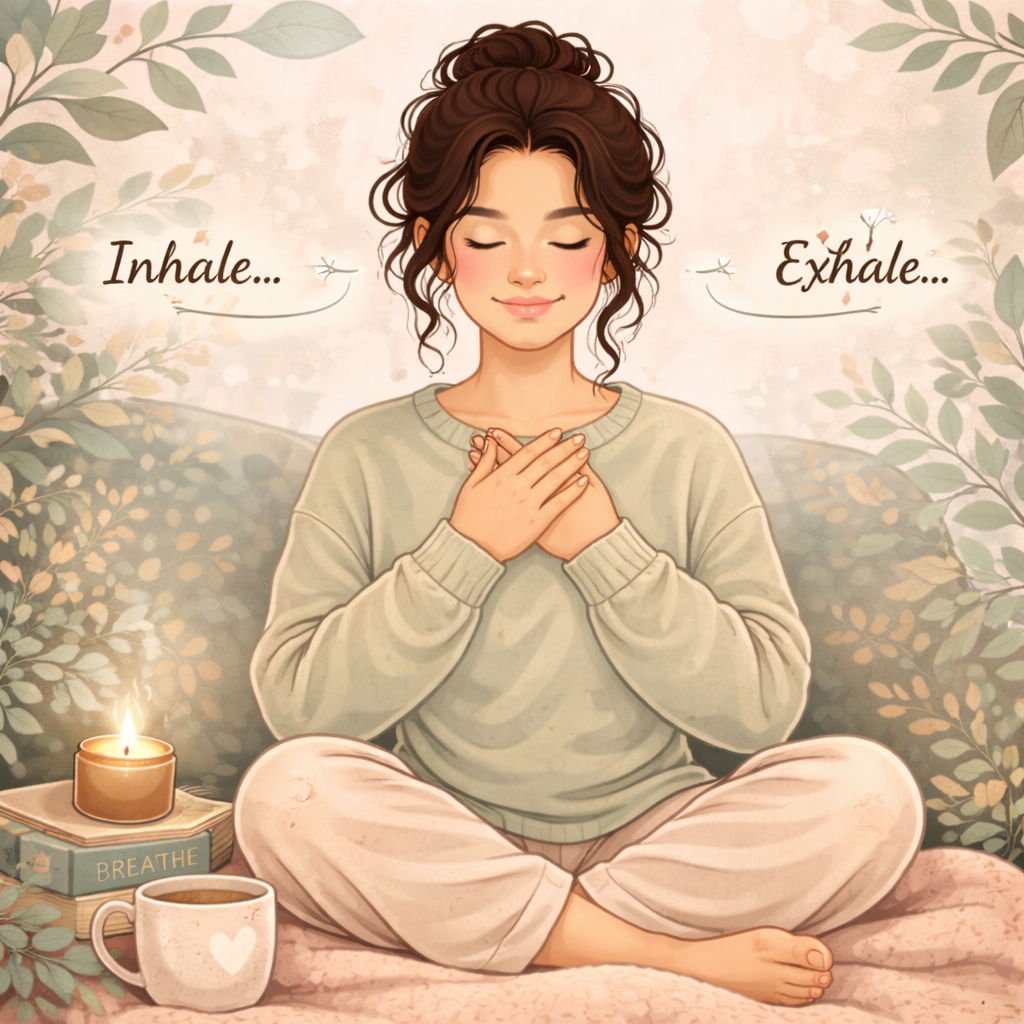
This signals safety while you shift your internal dialogue. For more information on these resets you can refer back to my last blog: Nervous System Regulation: How to Reset, Rest, and Feel Safe in Your Body Again
5. Practice Micro-Moments of Self-Kindness
Self-kindness doesn’t have to be big or dramatic.
It can look like:
Letting yourself pause
Choosing not to push through exhaustion
Speaking gently to yourself after a mistake
These moments gradually retrain your nervous system.
Why Self-Kindness Feels Uncomfortable at First

If you’re used to operating from pressure or criticism, self-kindness can feel unfamiliar or even wrong.
You might think:
“If I’m too gentle, I’ll fall behind”
“This feels like I’m letting myself off the hook”
But what’s actually happening is:
Your nervous system is adjusting to a new way of being.
Over time, self-kindness doesn’t reduce motivation, it creates:
More clarity
Better focus
Sustainable energy
More safety inside your body
Connecting This Back to Nervous System Regulation

When you reduce self-criticism, you’re not just improving your mindset.
You’re:
Lowering your baseline stress response
Creating internal safety
Supporting emotional regulation
Increasing your capacity to handle challenges
This is foundational work.
And it’s what allows everything else, confidence, boundaries, emotional stability, to begin to shift.
Key Takeaways
Self-criticism is a major contributor to nervous system dysregulation
Your body interprets harsh internal dialogue as a threat
Awareness is the first step to change
Shifting to curiosity and softer language supports regulation
Self-kindness may feel uncomfortable, but it creates long-term stability
Reducing internal pressure helps your body move out of survival mode
If you’re constantly feeling overwhelmed, second-guessing yourself, or stuck in patterns of internal pressure, your nervous system may be asking for support, not more discipline.
Download my Free 5-day Nervous System Reset Workbook to begin shifting out of self-criticism and into a more grounded, steady state.
Or, if you’re ready to go deeper:
Schedule a free consultation to explore my 6-week self-trust program, where we work through anxiety, self-doubt, and nervous system regulation in a supportive, structured way.
FAQ Section: Self-Criticism and Nervous System Regulation
-
Self-criticism activates a stress response in the body. Your nervous system interprets harsh internal dialogue as pressure or threat, which can increase anxiety and emotional reactivity.
-
Self-criticism is often a learned pattern developed to maintain control, meet expectations, or avoid mistakes. Over time, it becomes automatic.
-
Start by noticing it without judgment. Then gradually shift your tone to something more neutral or supportive, like “This is hard right now” or “I can take this one step at a time.”
-
Self-discipline is structured and supportive. Self-criticism is harsh and pressure-driven. One creates stability, while the other activates stress.